Research
- Sign writing // is sign writing dying due to technology?
- "Technology" or digital image-making or contemporary graphic design?
- Any specific area / industry / application?
- In defence of sign writing
- Focus more on "sign writing" rather than digital technology.
- Look at traveler culture, how sign writing was influenced by this. Wagons, etc.
- Primary research - sign writing used in various contexts:
- Traveler culture
- Coffee shops
- Granary Wharf
- Clarence Dock
Practical
- Connecting with history - pastiche
- What is the commercial potential of sign writing?
- Can you find a client and produce some work for them? Reflecting on the defense of sign writing and showing that there is still a need?
What questions do I want to investigate?
- What is the history of sign writing?
- Why was sign writing important?
- Is sign writing still important?
- How has technology affected sign writing? Positives and negatives..
- Do people still appreciate sign writing? Why?
- How did structure within design affect sign writing traditions?
- Do people paint within trends? Or stick to traditional styles?
- How has the digital age affected the use of typography and the need for legibility vs creativity?
- Has hand rendered typography become more apparent now that everyone is bored of the 'norm'?
- Can sign writing be used commercially?
- Where has it been used effectively within the industry?
- What are the visual qualities of sign writing?
- Is sign writing coming back into trend?
- What does the future hold for sign writers and letterers?
After considering my list of questions, I decided on 2...
Primary Question:
How has the digital age affected the use of typography and the need for legibility vs creativity?
Secondary Question:
What does the future hold for sign writers and letterers?
First Thoughts and Preconceptions...
In the digital era, there are a lot of alternative solutions to sign writing that are cheaper, quicker and a whole lot easier. But I don't think that these alternatives are anywhere near as high quality, or that they even hold as much character as a hand painted sign. For example, vinyl needs to be replaced every year or so, as the weather effects the sticky plastic a whole lot quicker than it effects enamel. It may still end up a lot cheaper than paying someone to paint you something, but I think that there is affordability in quality.
Computers and technology have definitely affected typography, and in many different ways. I think that computers have limited designers. People are afraid to step outside their comfort zones and experiment with their designs. People are afraid to fail, where as before when you'd have to hand draw your posters, or create them through screen printing / letter press, designers seemed to be a lot more experimental and would play around, knowing that they could fail or even cause a happy accident. Designing definitely seemed to be more of a skill before computers. Nowadays, anyone and everyone thinks they're a designer if they have the right software!
Weingart’s quote: “What's the use of being legible when nothing inspires you to take notice of it?" If designers aren't experimenting with their typography, or trying to produce something new and exciting, who is going to want to look at it? It's boring following rules and structure, and creating the same things over and over again. I think that sign writing and lettering are so much more exciting when it comes to typography usage, as you can really make something catch your eye and stand out from the crowd, whilst still being completely legible.
I think that the future still holds a place for sign writers and letterers, but it's definitely becoming a niche market, as a lot of people like to think that they can produce the same work themselves by printing things out or cutting it out of vinyl... I think that sign writing is an art form, and should definitely be more appreciated and sought after.
What is the purpose of the study?
To find out whether sign writing is becoming extinct, and whether there's any way of helping the public appreciate the skill and craftsmanship.
Is your question researchable?
I think so! I've found lots of books on the subject already, and have even bought the Sign Painters film to watch to get more of an insight into it. There are also lots of books out there that are about technological advances that will help guide my research.
Title:
How has the digital age affected the use and importance of typography within sign writing?
I am planning on researching into an area of typography that is particularly interesting to me - hand rendered typography. I have noticed that it has started to become more of a trend within design, as people start to branch out from their computers and start playing with design rules. Within this research, I plan to focus on both drawn and painted type, for example areas of drawn typography, such as..

and areas of painted typography, in the form of sign painting..

as I've found a recent love for sign painting, I'd imagine my research will edge more towards the skill behind the craft and the variety of traditional methods that are put into place when painting a sign.
I want to look into the history behind sign painting and drawn typography - find out why it became important, how it became popular, and how it sits in today's design society. The history behind it will also involve areas of English history, such as the sudden demand for literacy and the Guttenburg Press - how all of this impacted the need for painted signs. Did this effect the need for hand written type though? As people found letterpress faster and easier, more effective for mass production. How the letterpress also led to structure, swiss design etc. How this effected the need for sign writers and letterers / how it affected their design styles.
Look at illuminated manuscripts - very early form of lettering.
Weingart’s quote: “What's the use of being legible when nothing inspires you to take notice of it?" How has the digital age affected the use of typography and the need for legibility vs creativity? Has hand rendered typography become much more apparent now that everyone is bored of the 'norm'?
Sign Writing
Sign painting is a learned craft with a long history. Historically artisans acquired the craft through apprenticeship, although many early sign painters were self-taught. An apprenticeship could last for years, depending on the skill of the apprentice and the knowledge of the master. The skills learned were varied, and some were complex. At the core of the training was proficiency in the manipulation of a lettering brush: this alone could take years to develop. A number of associated skills and techniques were also taught, such as gold leafing (surface and glass), carving (in various mediums), glue-glass chipping, stencilling, and silk-screening.
With the advent of computer software, sign painting has been displaced by computer controlled sign-making machines. The craft has all but disappeared, and is now only still taught in a few technical schools or specialty schools.
Old painted signs which fade but remain visible are known as ghost signs.


Quotes I picked up from the short film:
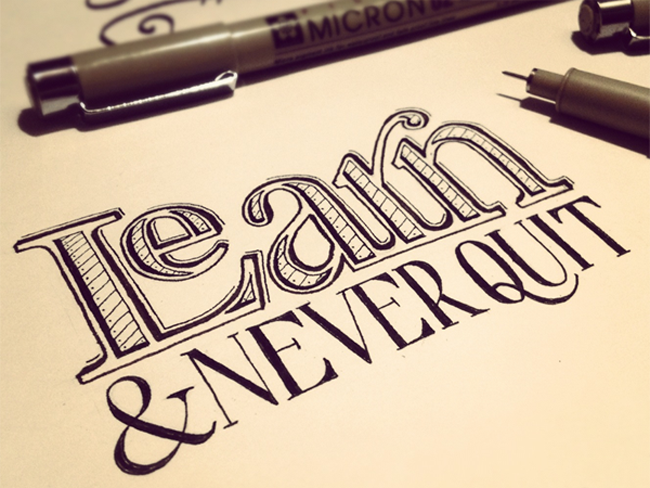
Lettering is the art of making letterforms by drawing or using lettering instruments. The art or technique of scribing letters onto something.


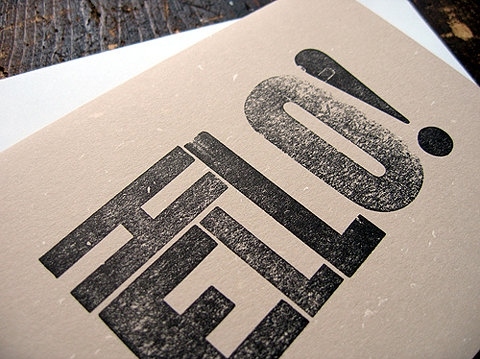
Letterpress
Letterpress printing is a technique of relief printing using a printing press. A worker composes and locks movable type into the bed of a press, inks it, and presses paper against it to transfer the ink from the type which creates an impression on the paper.
In practice, letterpress also includes other forms of relief printing with printing presses, such as wood engravings, photo-etched zinc "cuts" (plates), and linoleum blocks, which can be used alongside metal type in a single operation, as well as stereotypes and electrotypes of type and blocks.[1] With certain letterpress units it is also possible to join movable type with slugs cast using hot metal typesetting.
Letterpress printing was the normal form of printing text from its invention by Johannes Gutenberg in the mid-15th century until the 19th century and remained in wide use for books and other uses until the second half of the 20th century. Letterpress printing remained the primary way to print and distribute information until the twentieth century, when offset printing was developed, which largely supplanted its role in printing books and newspapers. More recently, letterpress printing has seen a revival in an artisanal form.


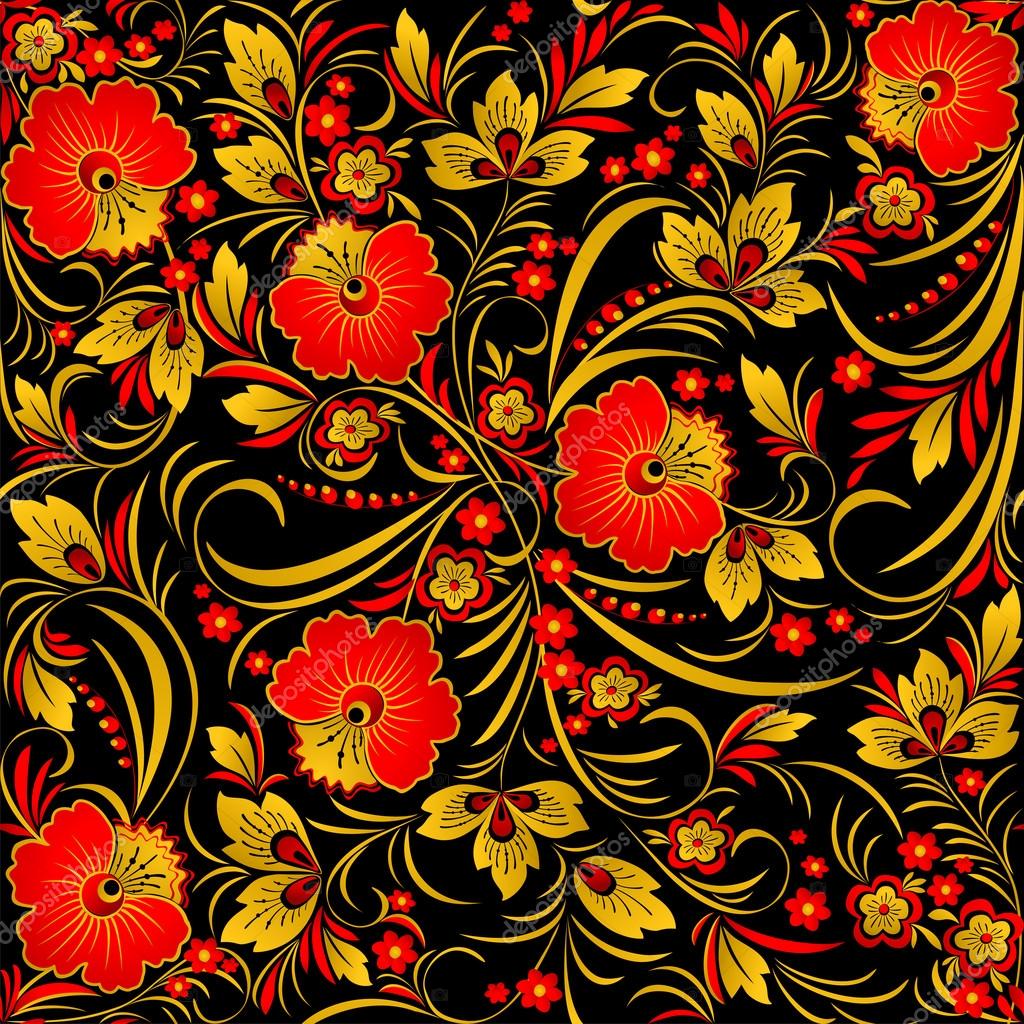
Khokhloma or Khokhloma painting (Хохлома or Хохломская роспись in Russian, or Khokhlomskaya rospis', Russian pronunciation: [xəxlɐˈma]) is the name of a Russian wood painting handicraft style and national ornament, known for its vivid flower patterns, red and gold colors over a black background, and the effect it has when applied to wooden tableware or furniture, making it look heavier and metal-like.




- Leave your comment • Category: brief 2 (505), OUGD505
- Share on Twitter, Facebook, Delicious, Digg, Reddit
